
Hydration for Performance: A Practical Electrolyte Strategy
Hydration for performance made practical: learn when water is enough, how much sodium to use, and how to replace sweat losses.
FREE US Shipping on All Orders Over $99
Stop guessing at the gym. Build a simple weekly routine and track what you’re actually doing.

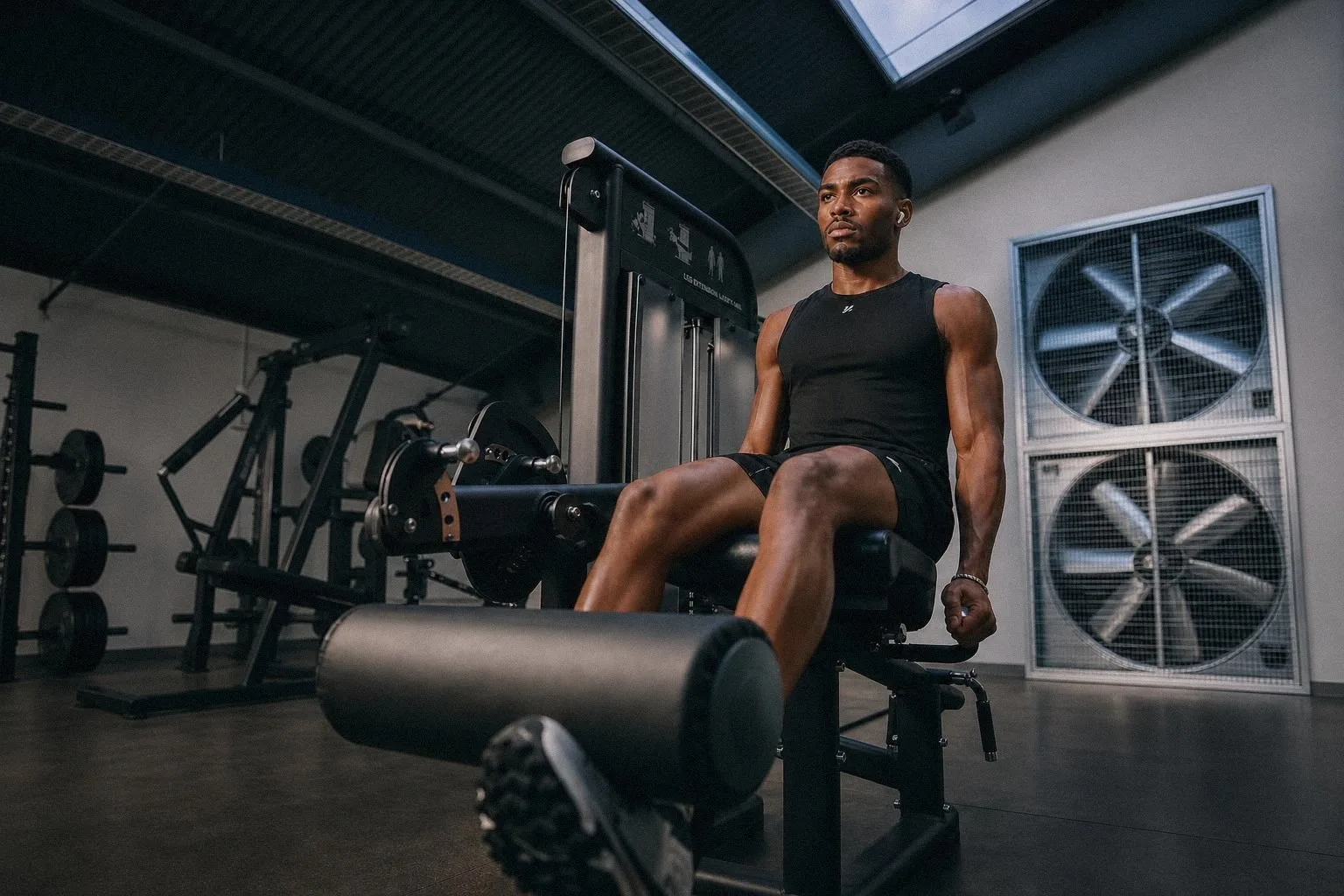
Your usual working weights feel heavier. Repetitions are falling despite consistent effort. Instead of adjusting the program, you add sets, increase caffeine, and push harder.
That response deserves scrutiny, but it does not automatically mean you have overtraining syndrome. The clinical condition involves prolonged performance impairment, not simply soreness, a difficult training week, or one disappointing session 1.
The useful question is not whether you are training “too hard” in isolation. It is whether your training demands, nutrition, sleep, and other responsibilities remain compatible.
This article explains how to distinguish normal fatigue from a more persistent problem, which warning signs matter, and how to respond without abandoning productive training or expecting supplements to solve a programming issue.
“Overtraining” is often used to describe any period of feeling exhausted. Sports science distinguishes several different responses to training stress.
| Training response | What it means | Typical recovery pattern |
|---|---|---|
| Normal training fatigue | A temporary reduction in readiness after exercise | Usually resolves within hours to days |
| Functional overreaching | A short-term performance reduction followed by improvement after recovery | Days to weeks |
| Nonfunctional overreaching | A longer performance reduction without a useful subsequent improvement | Weeks to months |
| Overtraining syndrome | Prolonged maladaptation with persistent underperformance and associated symptoms | Often months or longer |
These are approximate patterns, not diagnostic deadlines. Distinguishing the conditions often depends on how performance responds over time and whether other explanations have been excluded 1.
Feeling tired is a reason to review recovery, not sufficient evidence of a syndrome.
Likewise, planned overload is not inherently a mistake. The problem is repeatedly applying demands that the athlete is not successfully recovering from.
A systematic review of 22 resistance-exercise studies found substantial methodological problems, including inconsistent diagnostic criteria and inadequate follow-up. Few studies adequately established functional overreaching, nonfunctional overreaching, or overtraining syndrome 2.
That limits confident claims about how commonly the syndrome occurs in recreational lifters. The review identified sustained performance deterioration as the most useful established indicator, rather than a particular hormone level or subjective sensation 2.
For someone lifting three to six days weekly, the practical priority is therefore to recognize persistent deterioration, not diagnose a clinical condition from an online checklist.
Potential warning signs include:
These symptoms are nonspecific. Their presence does not establish overtraining syndrome 3.
A practical example is a lifter whose squat performance declines across several comparable sessions while sleep, motivation, and general energy also deteriorate. That pattern warrants more attention than one weak workout after a late night.
Before interpreting the numbers, check whether the comparison is fair. Different exercise order, shorter rest periods, stricter technique, or a different machine can make apparent regression difficult to interpret.
Compare like with like before deciding that performance is declining.
A scoping review identified numerous proposed diagnostic measures, including hormones, heart rate variability, questionnaires, and exercise tests. None provided an established standalone diagnostic solution 4.
A low readiness score, unusual resting heart rate, or isolated cortisol result should therefore not be treated as confirmation. Even proposed multivariable diagnostic scores require further validation, including in larger samples and female athletes 4.
Measurements can inform a conversation about recovery. They cannot replace a clinical assessment.
A systematic review of 56 studies found that subjective measures of athlete well-being generally responded to training-load changes more sensitively and consistently than commonly used objective measures 5.
That supports a simple monitoring approach rather than an increasingly elaborate dashboard.
Record a small number of consistent observations:
| Measure | What to record |
|---|---|
| Performance | Load, repetitions, and estimated repetitions in reserve |
| Training demand | Working sets and additional conditioning |
| Sleep | Approximate duration and perceived quality |
| General fatigue | A consistent personal rating |
| Motivation and stress | Brief notes on meaningful changes |
This is a practical application of monitoring research, not a validated diagnostic score.
Review the pattern weekly. Ask whether performance and well-being are moving together, and whether a change in training or life circumstances explains the trend.
For example, a new shift schedule may deserve attention before you rewrite an otherwise successful training split. Missing information is often more important than another metric.
A plateau is not an instruction to increase everything.
Before adding sets, ask:
Change one major variable at a time when possible. Otherwise, it becomes difficult to identify why the program stopped working or which adjustment helped.
The goal of this audit is not to label every plateau as overtraining. It is to avoid making an unexplained problem harder to interpret.
Training to momentary muscular failure is not required on every working set.
A meta-analysis found no statistically significant overall difference between failure and nonfailure training for strength or hypertrophy. A trained-participant subgroup showed a small hypertrophy advantage for failure training, but that finding came from limited evidence 6.
The practical interpretation is not that failure is useless. It is that its use should be deliberate rather than compulsory.
During a recovery-focused period, leaving additional repetitions in reserve is one way to reduce training demands. Importantly, research comparing failure and nonfailure training does not establish that failure training itself causes overtraining syndrome 6.
Meeting a protein target does not tell you whether total energy and carbohydrate availability are adequate.
A review examining training overload and relative energy deficiency in sport found substantial symptom overlap. Inadequate fueling may contribute to, coexist with, or be mistaken for problems attributed to overtraining 7.
Energy availability refers to the dietary energy remaining for other physiological functions after exercise expenditure. It is not interchangeable with protein intake.
As a practical audit, write down a few representative training days, including meals, snacks, and changes in body weight. If you have simultaneously increased training and reduced food, discuss that combination with a sports dietitian rather than assuming another recovery supplement is the missing piece.
This does not mean every calorie deficit causes a syndrome. It means persistent underperformance deserves a broader nutritional assessment 7.
A deload is a temporary reduction in training stress. Expert consensus in strength and physique sports supports adjusting variables such as volume, intensity of effort, frequency, and exercise selection to suit the athlete 8.
For routine accumulated fatigue, an illustrative adjustment could be:
Those numbers are a coaching example, not a validated treatment protocol. Deload design should reflect the program and the individual, rather than a universal schedule 8.
Do not replace the removed lifting with equally demanding conditioning. Write down what you are reducing so that the adjustment is real, not merely a change of exercise.
Related reading: How to Build a Smart Weekly Training Split Without Burning Out.
Deloading should not be marketed as a guaranteed way to “reset” muscle growth.
In a nine-week randomized resistance-training study, taking one complete week off midway through the program did not improve hypertrophy, while lower-body strength outcomes favored continuous training 9.
However, complete training cessation is not the same intervention as reducing training stress while continuing to lift. The study also was not a treatment trial in athletes diagnosed with overtraining syndrome 9.
The useful conclusion is narrower: use a reduction in training demand for a clear reason, not because a scheduled break supposedly guarantees superior adaptations.
Sleep deserves attention, but avoid reducing the issue to “one bad night ruins your gains.”
An athlete sleep consensus found clearer evidence of performance impairment after complete sleep deprivation than after short periods of partial restriction, where findings were more variable. It also emphasized individual sleep needs rather than a rigid prescription 10.
For many adults, seven to nine hours is a reasonable starting range, while some athletes may require more 10.
Practical changes include:
These are sleep-supportive practices, not a treatment for persistent insomnia. Ongoing sleep problems may require professional assessment 10.
Related reading: How Stress and Sleep Debt Destroy Your Gym Performance.
For most healthy exercising adults, an intake of approximately 1.4–2.0 grams of protein per kilogram of body weight daily is a supported general range 11.
At 80 kg, that equals approximately 112–160 g daily. Requirements can differ with dietary restriction, training demands, and individual circumstances 11.
Resistance exercise and protein ingestion both stimulate muscle protein synthesis. However, that acute response does not demonstrate that adding protein treats a prolonged performance disorder 11.
Use meals as the foundation. A protein powder is a convenience option when it helps close an actual intake gap, not an additional requirement when your diet already supplies enough.
Do not wait months for a problem to become “serious enough” to investigate.
Arrange assessment when fatigue or performance impairment persists despite a meaningful reduction in training, or when symptoms are substantial, worsening, or affecting everyday life.
Clinical evaluation may consider alternatives such as iron deficiency, infection, thyroid dysfunction, nutritional deficiencies, and mental health conditions. Overtraining syndrome is a diagnosis of exclusion, not simply the explanation left after a difficult training block 3.
Bring your training log, symptom timeline, sleep notes, and a realistic account of food intake. These provide context without presuming a diagnosis.
Normal fatigue is temporary. Persistent underperformance accompanied by broader symptoms warrants investigation, but symptoms alone cannot establish a diagnosis 1. Track comparable sessions and seek assessment if the problem continues.
Frequency alone is not a diagnosis. Research in resistance training does not establish a universal session limit that separates productive training from maladaptation 2. Review the full program and its effects rather than counting gym visits.
It depends on the condition. Functional overreaching may resolve within days to weeks, nonfunctional overreaching can take weeks to months, and overtraining syndrome may require months or longer 1. These ranges are not self-diagnostic cutoffs.
Protein powder can help you meet protein requirements, but evidence supporting protein intake for training adaptation is not evidence that it treats overtraining syndrome 11. Address training demands, sleep, overall fueling, and any underlying medical issue.
Start with your training log and a representative week of meals. Identify whether the gap is excessive training demand, insufficient sleep opportunity, inadequate food intake, or a combination.
If protein intake is genuinely falling short, Ethica Isolate, 100% Isolate Whey Protein, provides 25 g of protein per serving as a convenient option alongside meals.
If you already meet your protein needs, an additional shake may be unnecessary. Use Ethica Isolate to solve a practical dietary gap, not as permission to ignore persistent fatigue or keep adding work.
Hydration for performance made practical: learn when water is enough, how much sodium to use, and how to replace sweat losses.
Improve pre-workout focus with evidence-based guidance on caffeine, L-theanine, and nootropics, without overlooking sleep or safety.

Learn how progressive overload supports strength and muscle growth, when to add weight or reps, and how to manage training plateaus.

Full-body vs split routines: compare muscle growth, strength, recovery, and weekly schedules to choose a program you can sustain.

Build effective resistance band workouts with evidence-based guidance on exercises, sets, effort, and progression for muscle growth.

Learn how to warm up for heavy lifting with practical ramp-up sets, mobility guidance, and squat, bench press, and deadlift examples.
