
Hydration for Performance: A Practical Electrolyte Strategy
Hydration for performance made practical: learn when water is enough, how much sodium to use, and how to replace sweat losses.
FREE US Shipping on All Orders Over $99
Stop guessing at the gym. Build a simple weekly routine and track what you’re actually doing.

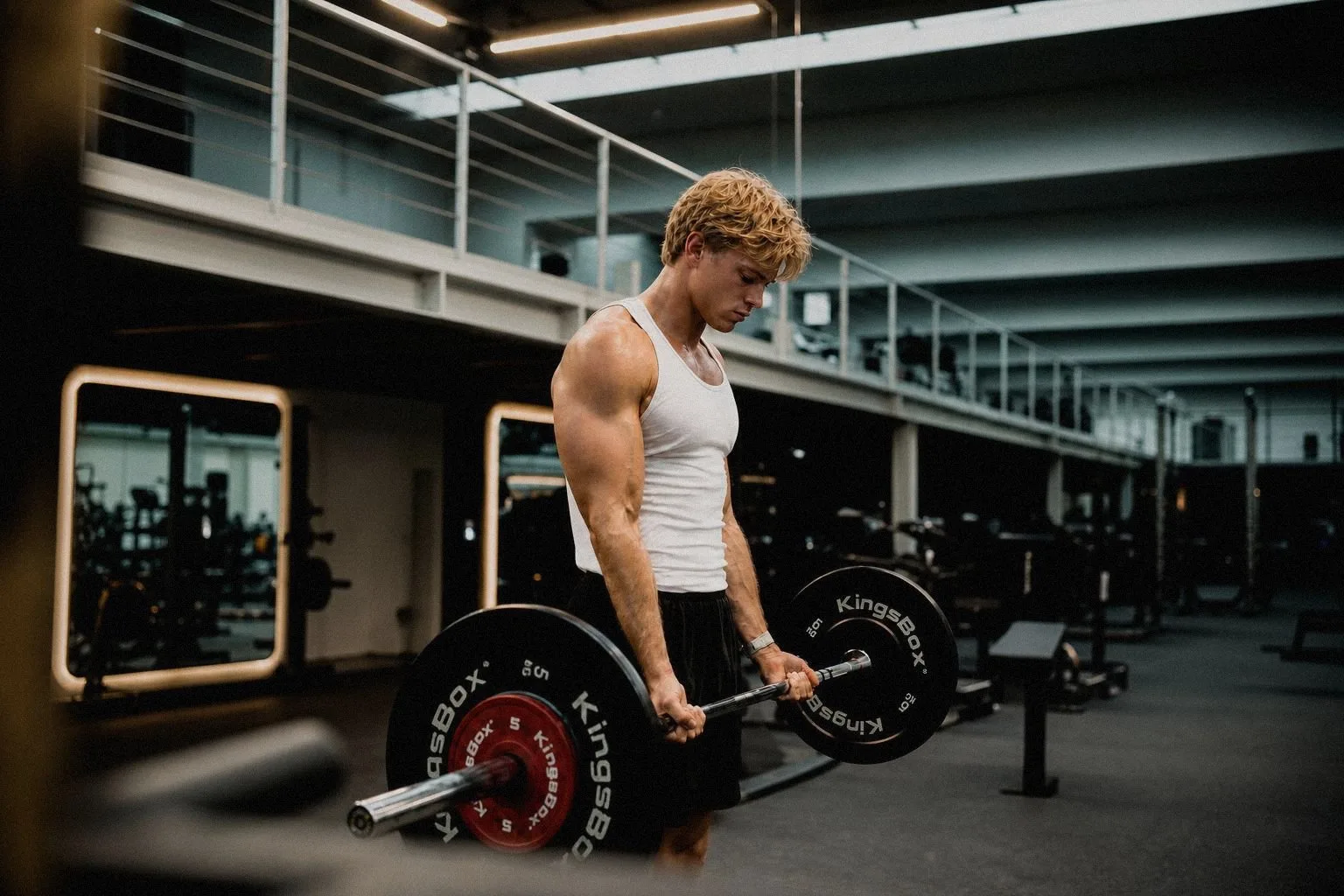
Your pre-workout delivers tingles, a noticeable buzz, and a long ingredient list. But which ingredients actually justify their place in the formula?
That question matters more than how strongly you feel a supplement working. An ingredient might produce a noticeable sensation without improving your training. Another might be useful, but only after weeks of consistent supplementation rather than one scoop before lifting.
The most overrated pre-workout ingredients are not necessarily useless. Often, their reputation exceeds the evidence for a particular outcome, dose, or training context.
This guide separates weak purchasing priorities from useful but misunderstood ingredients, explains the alternatives, and shows how to build a simpler strategy around your actual needs.
For this article, “overrated” means the marketing promise is stronger than the evidence relevant to a healthy, regularly training adult.
Three questions help expose that mismatch:
Research on complete pre-workout formulas cannot establish that every ingredient contributes. Proprietary blends also make comparisons difficult when individual amounts are undisclosed 1.
Use the following as a purchasing framework, not a universal ranking.
| Ingredient or practice | Why its reputation needs qualification | More defensible priority |
|—|—|—|
| Isolated BCAAs | Incomplete amino acid provision | Complete dietary protein 2 |
| Glutamine for gym performance | Unconvincing evidence for key advertised outcomes | Identify a genuine nutritional gap 4 |
| Arginine for guaranteed pumps and performance | Mixed, protocol-dependent results | Treat nitric oxide supplements as optional 5 |
| Beta-alanine taken occasionally | Benefits depend on repeated supplementation | A consistent protocol, if relevant 8 |
| Escalating caffeine doses | More stimulation does not ensure more benefit | An individually tolerable dose 10 |
Taking branched-chain amino acids before training provides a special muscle-building advantage.
BCAAs are leucine, isoleucine, and valine, three of the nine essential amino acids. Leucine helps activate signaling involved in muscle protein synthesis, but signaling is not the same as supplying all the amino acids needed to build protein 2.
Importantly, BCAAs are not biologically inactive. Human studies show they can transiently stimulate muscle protein synthesis. However, the response is generally smaller or less sustained than with a complete, high-quality protein source 2.
That acute response does not establish additional long-term hypertrophy when BCAAs are added to an already adequate diet.
Prioritize total daily protein. A large resistance-training meta-analysis estimated that additional fat-free-mass benefits plateaued around 1.6 g/kg/day, although uncertainty around that estimate and individual needs mean it is not a universal ceiling 3.
For an 80 kg lifter, 1.6 g/kg equals approximately 128 g daily.
Food can cover that target. A complete protein powder is a convenience option when it does not.
Before buying isolated amino acids, review an ordinary training day's meals. For the broader comparison, read *BCAAs, EAAs, and Complete Proteins: What's the Difference?*
Because glutamine has important physiological roles, adding it to your pre-workout should improve muscle growth, performance, or recovery.
Physiological importance does not automatically establish a supplementation benefit.
A systematic review and meta-analysis found no general improvement in aerobic performance or the principal body-composition outcomes examined, including lean mass and body-fat percentage. Although some outcomes changed, including body weight, that does not establish improved muscle growth or strength-training performance 4.
The review included varied populations and protocols. It should not be interpreted as resolving every possible use of glutamine, but it does not support treating glutamine as an essential pre-workout ingredient for regular lifters.
Do not assume every removed ingredient needs a replacement.
If your protein intake is low, address that gap. Protein supplementation can modestly improve resistance-training adaptations, with its usefulness depending partly on your existing intake 3.
If your diet is already adequate, keeping the money is a reasonable alternative.
More arginine means more nitric oxide, more blood flow, and therefore a better workout.
The performance evidence is more complicated than that chain of reasoning suggests.
A systematic review and meta-analysis reported a small pooled benefit for anaerobic performance and a larger estimated aerobic benefit. However, aerobic results varied substantially between studies. Protocols also differed in dose, duration, and exercise testing 5.
The conclusion is not “arginine does nothing.” It is that the evidence does not justify expecting a reliable lifting benefit from any product containing it, particularly when the amount is undisclosed.
Citrulline malate is a reasonable ingredient to evaluate, but it should not simply inherit arginine's exaggerated promises.
An earlier meta-analysis found a small improvement in repetitions to failure: approximately three additional repetitions across the tested exercise protocols, not three extra repetitions on every set. Included studies generally used 6–8 g of citrulline malate 40–60 minutes before exercise 6.
A broader 2026 meta-analysis also found a small average performance benefit, but rated the evidence low to very low certainty. It did not establish a dependable optimal dose, timing, or target population 7.
Practical conclusion: Citrulline malate is an optional experiment, not a foundation. Small acute performance effects do not demonstrate greater long-term hypertrophy.
If you try it, record repetitions at standardized loads and rest intervals rather than judging it only by the pump.
Feeling beta-alanine tingles before training means the supplement is immediately improving your performance.
Beta-alanine is not inherently one of the overrated pre-workout ingredients. Its immediate effects are often misunderstood.
Repeated supplementation increases muscle carnosine, which contributes to intracellular buffering during demanding exercise. Commonly studied protocols use approximately 4–6 g daily for at least 2–4 weeks. Tingling, or paresthesia, is a side effect, not a performance test 8.
A meta-analysis found a small overall benefit, with exercise duration influencing the result. Benefits were more apparent in certain exercise-capacity tests than in fixed-endpoint performance tests 9.
That distinction matters: extending a laboratory effort to exhaustion is not identical to improving a competition result or a heavy single.
Replace occasional, sensation-driven use with a goal-specific decision:
Do not double your caffeinated pre-workout simply to obtain more beta-alanine. That makes two separate dosing decisions unnecessarily dependent on each other.
A more stimulating pre-workout produces a more productive session.
Caffeine has credible evidence for acute exercise benefits. The overrated practice is escalating the dose as though stimulation and performance increase together.
The ISSN position stand identifies 3–6 mg/kg as a commonly effective research range, while some benefits may occur around 2 mg/kg. Very high doses, such as 9 mg/kg, increase side effects without appearing necessary for performance benefits 10.
For an 80 kg adult, those amounts equal:
These are research doses, not instructions to reach the upper end.
Use the lowest amount that provides a worthwhile benefit without unacceptable effects. Anxiety, palpitations, and sleep disturbance are reasons to reconsider caffeine use, not evidence that a formula is particularly effective 10.
Timing deserves equal attention. A systematic review and meta-analysis found that caffeine reduced subsequent sleep duration and efficiency, with dose and timing affecting the result 11.
For evening training, a stimulant-free routine may be the more sensible choice. There is no single caffeine cutoff that guarantees unaffected sleep.
Count coffee, energy drinks, and supplements together rather than considering each serving in isolation.
Creatine monohydrate has stronger support than many ingredients promoted for immediate pre-workout effects. Increasing muscle creatine stores can improve high-intensity exercise capacity and support training adaptations 12.
A practical approach is 3–5 g daily, including rest days. Without loading, stores rise gradually over several weeks. It is not an acute stimulant, so taking one isolated serving immediately before training is not the relevant strategy 12.
Choose a routine you can follow consistently. Breakfast, lunch, or another predictable daily habit may be easier than tying supplementation exclusively to gym attendance.
A shake should solve a protein-intake problem, not serve as another compulsory pre-workout ritual.
Ethica Isolate, 100% Isolate Whey Protein, supplies 25 g protein per serving. It can be a convenient way to fill a dietary gap before or after training, according to your schedule.
It is not a stimulant and should not be presented as a substitute for caffeine's acute effects.
Whey isolate is also not automatically the right choice for everyone. Compare cost, dietary preferences, tolerance, and convenience. If ordinary meals already cover your needs, supplementation may add little practical value.
Recognizing overrated pre-workout ingredients is useful. Recognizing an unassessable formula is equally important.
Use this checklist:
The pre-workout literature includes encouraging findings, but mixed results and frequently short study durations limit broad claims about complete formulas 1.
A transparent label makes evaluation possible. It does not, by itself, establish effectiveness.
The following is an implementation framework, not a claim that everyone needs the same supplement combination.
Start by asking whether anything is missing. If you have eaten, feel prepared, and perform consistently, you may not need another product.
For a two-week audit, keep your training log and note:
These notes will not reproduce a controlled trial, but they can make purchasing decisions less dependent on one unusually good workout.
Do not default to a complicated amino acid blend. Review how the entire day supports your protein target, then choose a food or shake schedule you can tolerate and maintain.
For meal-planning ideas, read What to Eat Before Lifting: The Ultimate Pre-Workout Nutrition Guide.
Do not assume “stimulant-free” means you need a replacement powder. It may simply mean removing caffeine from that session.
Keep any daily creatine or beta-alanine routine separate from whether you use a pre-workout drink.
The central lesson is to stop asking one scoop to perform several unrelated jobs.
Yes. Pre-workout supplementation is not a prerequisite for resistance-training gains. Its role is optional, and improvements reported with particular formulas should not be generalized to every product 1.
No. Tingling is a side effect. The relevant mechanism involves increased muscle carnosine after repeated supplementation, not whether a serving produces a noticeable sensation 8.
Possibly, if you accept a small and uncertain benefit. Some studies suggest improved repetition performance, but broader evidence remains low certainty. Treat it as optional rather than essential 6 7.
Not in the sense of producing the same immediate effect. Creatine works through increased tissue stores, while caffeine can acutely affect performance. You can use creatine without taking a caffeinated pre-workout 10 12.
Before buying another pre-workout, identify the specific problem you want it to solve. Then check whether the ingredient, amount, and supplementation schedule match that purpose.
If the gap is daily protein, consider Ethica Isolate, 100% Isolate Whey Protein, as a convenient 25 g protein option. If food already covers your needs, keep that approach.
A useful supplement strategy does not need more ingredients. It needs a clear reason for each one.
Hydration for performance made practical: learn when water is enough, how much sodium to use, and how to replace sweat losses.
Improve pre-workout focus with evidence-based guidance on caffeine, L-theanine, and nootropics, without overlooking sleep or safety.

Learn how progressive overload supports strength and muscle growth, when to add weight or reps, and how to manage training plateaus.

Full-body vs split routines: compare muscle growth, strength, recovery, and weekly schedules to choose a program you can sustain.

Build effective resistance band workouts with evidence-based guidance on exercises, sets, effort, and progression for muscle growth.

Learn how to warm up for heavy lifting with practical ramp-up sets, mobility guidance, and squat, bench press, and deadlift examples.
